 how-to
How to Design a Bespoke Travel Itinerary
Last Updated: October 25, 2026
Quick Summary
Bespoke travel itinerary design is a personalized, custom-designed travel plan tailored to one traveler's or group's preferences, interests, budget, and schedule. Unlike pre-packaged tours, it adapts to what matters most to you by asking the right questions upfront, researching thoroughly, and sequencing destinations and activities in a way that feels natural and achieves your actual travel goals.
- Start by documenting travel style, pace preferences, accessibility needs, dietary restrictions, and non-negotiable requirements through a custom vacation planning questionnaire.
- Don't pack more than 4-5 destinations into a two-week trip and allow at least one full day for arrival and settling in.
- Balance high-energy activities throughout the trip with slower days, mixing active exploration with rest time to prevent traveler exhaustion.
- Verify opening hours, seasonal access, real travel times, and reservation requirements before finalizing any itinerary.
- The final itinerary should include day-by-day schedules, accommodation details, transportation arrangements, activity confirmations, emergency contacts, and backup options.
Table of Contents
- Understanding Bespoke Travel Itinerary Design
- Step 1: Conduct a Custom Vacation Planning Questionnaire
- Step 2: Research Destinations and Create Luxury Travel Itinerary Examples
- Step 3: Set a Budget and Timeline Using Travel Itinerary Planning Timeline Best Practices
- Step 4: Sequence Destinations and Balance Activities With Downtime
- Step 5: Apply Travel Itinerary Design Best Practices to Refine Your Plan
- Step 6: Coordinate Accommodations, Transportation, and Logistics
- Finalizing Your Bespoke Itinerary
- Frequently Asked Questions
Understanding Bespoke Travel Itinerary Design
A bespoke travel itinerary is a personalized, custom-designed travel plan tailored specifically to one traveler's or group's preferences, interests, budget, and schedule.
At Cafe Trips and Tours, we craft custom itineraries that blend culture, faith, and coffee experiences into every journey.
The process of bespoke travel itinerary design takes time and attention. It requires asking the right questions upfront, researching thoroughly, and then sequencing destinations and activities in a way that feels natural and achieves your actual travel goals.
This guide walks you through the entire process, from initial discovery conversations through final coordination, so you can either design your own itinerary or understand exactly what a professional travel planner should be doing on your behalf.
Step 1: Conduct a Custom Vacation Planning Questionnaire
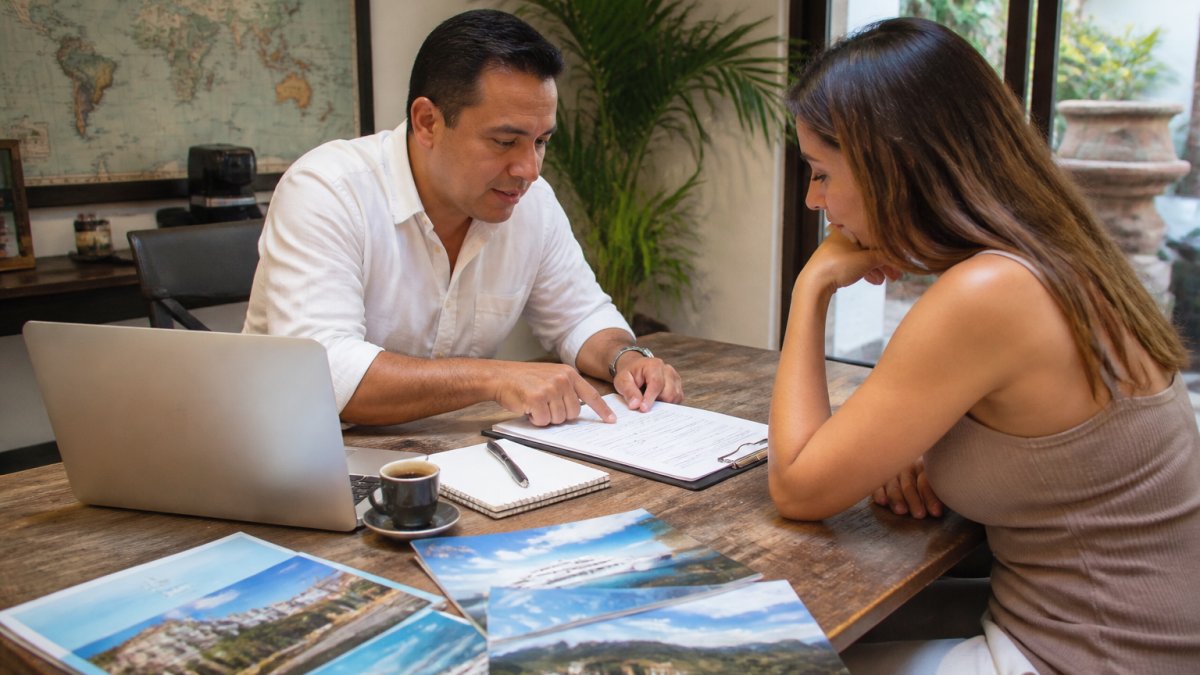
The foundation of any bespoke itinerary is understanding who you are as a traveler. Before you look at a single destination or book anything, you need answers to the right questions.
Start by identifying your travel style and pace preferences. Are you someone who wants to see as much as possible in a short time, or do you prefer lingering in fewer places? Do you thrive on structured daily plans, or do you need flexibility to wander? Are you interested in luxury accommodations and fine dining, adventure activities, cultural immersion, or a mix?
Travel style and pace preferences
Ask yourself these specific questions:
- How many destinations can you realistically enjoy in your available time?
- Do you prefer a slower pace (3-5 nights per location) or a faster one (1-2 nights)?
- What's your ideal balance between planned activities and free time?
- Are you traveling for relaxation, exploration, milestone celebration, or cultural experience?
- Do you prefer guided experiences or independent discovery?
Your answers shape everything that follows. A couple celebrating an anniversary needs a different itinerary than a group of friends seeking adventure. A retiree with unlimited time has different constraints than a busy professional stealing a week away.
Accessibility, dietary, and non-negotiable requirements
Next, document anything that affects logistics. This is where many generic itineraries fail, they don't account for real-world needs.
Capture these details:
- Mobility or accessibility requirements (stairs, long walking distances, specific room features)
- Dietary restrictions or preferences (vegetarian, allergies, kosher, halal, gluten-free)
- Health considerations (altitude, climate, specific activities to avoid)
- Visa or documentation needs
- Things that are absolutely non-negotiable (must include a specific experience, must avoid certain regions, must have certain amenities)
Writing these down prevents disappointment later. If someone needs wheelchair-accessible hotels and you don't account for it until you're booking, you've wasted time and created problems. If a traveler is vegan and you book a culinary tour at restaurants that don't accommodate that, the entire experience falls flat.
Step 2: Research Destinations and Create Luxury Travel Itinerary Examples
Once you understand who the traveler is, research destinations that match their profile. Don't just pick places you've heard of, match destinations to the specific travel style and interests you documented.
Start broad. What regions or countries align with the traveler's interests? If someone wants coffee experiences, focus on coffee-producing regions. If faith-based travel matters, identify pilgrimage destinations.
Then research specific attractions, activities, and experiences within those regions. Look for:
- Authentic local experiences, not just famous landmarks
- Seasonal considerations (weather, crowds, local events)
- Accessibility of attractions and ease of getting between them
- Opening hours, booking requirements, and whether reservations are needed
- Real travel times between locations (not just distance on a map)
Create 2-3 luxury travel itinerary examples to show the traveler what's possible. These aren't final, they're exploration tools. Show different pacing options, different destination combinations, or different activity mixes so the traveler can react to what appeals to them.
The research phase is where many people get stuck. There's too much information online. Use travel guides, tourism boards, and local expert recommendations.
Step 3: Set a Budget and Timeline Using Travel Itinerary Planning Timeline Best Practices
Before you sequence anything, establish the practical constraints: how much time and how much money.
Timeline is straightforward. How many days do they have? When are they traveling?
Budget is more nuanced. Pricing depends on quantity, dates, and delivery, factors like accommodation quality, activity inclusion, meal arrangements, and transportation all affect the total cost.
Work backward from the total budget to understand per-day spending. If someone has $10,000 for 10 days, that's different from $10,000 for 14 days. The per-day figure shapes every other decision.
When setting your timeline, follow these travel itinerary planning timeline best practices:
- Allow at least one full day for arrival and settling in
- Don't pack more than 4-5 destinations into a two-week trip
- Build in buffer time for travel between locations
- Account for one slower day per week for rest and flexibility
- Consider jet lag recovery time for international travel
These aren't rigid rules, they're starting points. A traveler familiar with fast-paced trips might handle more stops. Someone traveling for the first time might need more breathing room.
Step 4: Sequence Destinations and Balance Activities With Downtime
Now comes the actual design work: arranging destinations and activities into a day-by-day plan that flows logically and feels balanced.
Start with geography. What's the most efficient route between destinations? Flying across a country twice wastes time and money. A logical sequence minimizes backtracking.
Then layer in activities and experiences. Spread high-energy activities throughout the trip rather than front-loading them. A traveler who does intense sightseeing for four days straight will be exhausted by day five.
Balance matters. A day packed with three guided tours, two restaurant reservations, and a museum visit is exhausting.
Consider the sequence of experiences too. Don't put all the cultural sites in days 2-4 and relaxation in days 8-10. Mix them. This maintains engagement and prevents the trip from feeling monotonous.
Step 5: Apply Travel Itinerary Design Best Practices to Refine Your Plan
Once you have a rough day-by-day structure, test it against reality. This is where most DIY itineraries fall apart, they look good on paper but don't account for logistics.
Feasibility checks and contingency planning
Before finalizing anything, verify:
- Opening hours: Are attractions actually open on the days you're visiting? Many museums close Mondays. Some sites have seasonal hours.
- Seasonal access: Will that mountain pass be open in winter? Is that beach accessible during monsoon season?
- Travel time: Google Maps estimates are often optimistic. Add 30% to travel time estimates for real-world conditions.
- Reservations: Which experiences need advance booking? Which are first-come, first-served? Which have limited availability?
- Contingencies: If weather cancels an outdoor activity, what's the backup plan?
Watch out: If you discover an attraction closes the day before you arrive, or travel between locations takes twice as long as you estimated, the entire itinerary collapses. Verify before you commit.
Balancing flexibility with fixed reservations
The tension between flexibility and structure is real. Some experiences (fine dining restaurants, guided tours, certain accommodations) require advance booking. Others (wandering neighborhoods, local markets, spontaneous cafes) need no reservation.
The best itineraries include both. Book the non-negotiable experiences and the ones that might sell out. Leave some days with only loose plans so there's room for discovery. If a traveler hears about an amazing local market or stumbles onto a neighborhood they love, they should have time to explore it.
This balance depends on the traveler's preferences. Some people want every hour planned. Others want only one activity per day booked. Discuss this explicitly so the itinerary matches their comfort level.
Step 6: Coordinate Accommodations, Transportation, and Logistics
With the itinerary structure solid, handle the operational details.
Accommodations: Book hotels, villas, or other lodging that align with the traveler's comfort level and budget. Consider location, proximity to activities and transportation matters.
Transportation: Arrange flights, trains, car rentals, or transfers between destinations. Coordinate timing so arrivals and departures work with your itinerary. A flight that arrives at midnight ruins the first day.
Activity reservations: Book guided tours, restaurant reservations, museum tickets, or other experiences. Confirm cancellation policies and what happens if plans change.
Contingency contacts: Compile local emergency numbers, backup activity options, and contact information for all service providers.
At Cafe Trips and Tours, we handle all these details.
Finalizing Your Bespoke Itinerary
The final itinerary should be a comprehensive document that answers every question a traveler might have. It should include:
- Day-by-day schedule with times and locations
- Accommodation details (addresses, check-in times, contact information)
- Transportation arrangements (flight confirmations, transfer details, driving directions)
- Activity and reservation confirmations with cancellation policies
- Restaurant reservations with dress codes and dietary accommodations noted
- Emergency contacts and backup options
- Packing suggestions based on climate and activities
- Local tips and cultural context for each destination
The itinerary should feel like a conversation, not a document. It should anticipate questions and explain the reasoning behind choices. Why are you spending three days in this city instead of two?
A well-designed bespoke itinerary removes stress. Instead of wondering what to do next, the traveler knows. Instead of worrying about logistics, they trust that details are handled. Instead of second-guessing choices, they understand why each element was included.
This is what separates a vacation from an adventure. It's the difference between following a checklist and experiencing something genuinely memorable.
Designing a bespoke itinerary requires patience and attention to detail. It demands asking the right questions, researching thoroughly, and thinking through logistics that most travelers overlook.
| Step | Focus | Key Deliverable |
|---|---|---|
| 1 | Discovery | Travel preferences and requirements questionnaire |
| 2 | Research | 2-3 destination options with activity examples |
| 3 | Planning | Budget and timeline framework |
| 4 | Design | Day-by-day itinerary structure |
| 5 | Refinement | Feasibility verification and contingencies |
| 6 | Execution | Booked accommodations, transportation, activities |
Frequently Asked Questions
What is a bespoke travel itinerary?
A bespoke travel itinerary is a custom-designed travel plan tailored entirely to your preferences, travel style, budget, and goals. Unlike pre-packaged tours, a bespoke itinerary incorporates your specific interests, whether coffee experiences, faith-based sites, cultural immersion, or luxury accommodations, and sequences destinations, activities, and downtime to match your pace and priorities. It includes day-by-day schedules, accommodation details, transportation logistics, and curated experiences designed specifically for you.
How long does it take to create a custom vacation planning questionnaire and design process?
The timeline varies based on trip complexity, destination research needed, and seasonal availability. A straightforward itinerary may take 2-3 weeks from initial consultation to final delivery. Multi-destination trips, specialty experiences like coffee tours or faith-based journeys, and peak-season bookings typically require 4-8 weeks to ensure thorough research, vendor coordination, and reservation confirmation. Starting early allows for flexibility, better availability, and refinement rounds.
What information should I share with a travel advisor before planning?
Share your travel dates, budget range, number of travelers, any physical accessibility needs, dietary restrictions, and non-negotiables, experiences or destinations you absolutely want included. Describe your travel style: do you prefer a fast-paced itinerary with many stops, or slower exploration of fewer places? Mention special occasions, interests in culture, faith, coffee, cuisine, or wildlife, and how much free time you want versus structured activities. The more detail you provide, the more personalized and aligned your itinerary will be.
How do travel itinerary design best practices balance sightseeing, downtime, and travel between destinations?
Effective itineraries build in rest days after travel, cluster nearby attractions to minimize transfer time, and alternate active days with leisure time. Account for travel time between destinations, don't underestimate it, and schedule lighter activities on travel days. Consider local opening hours, seasonal closures, and realistic pacing so you enjoy experiences rather than rushing through them.