 how-to
How to Plan a Customized European Vacation Step by Step
Last Updated: November 1, 2026
Quick Summary
European vacation planning starts with your travel style, not your cities. Decide your pace, priorities, and comfort level first, then choose destinations and build a route that avoids backtracking. Booking several months ahead gives you room to compare options and secure better availability.
- Write down your pace, priorities, travelers, and comfort level before looking at flights.
- Plan at least two nights in most major cities and one or two in smaller towns.
- Count each move day as roughly half a sightseeing day when building your route.
- Shoulder season, late April to mid-June and September to late October, offers softer demand and comfortable weather.
- Limit a two-week trip to five to seven stops to avoid a rushed schedule.
Table of Contents
- How to Plan a Europe Trip Around Your Interests
- Step 1: Decide Your Travel Style and Priorities
- Step 2: Choose Your Destinations and Build a Route
- How Many Days to Spend in Europe for Each Stop
- Step 3: Set a Realistic Budget and Timing
- European Vacation Itinerary Examples to Compare
- Europe Trip Planning Checklist and Your Next Step
- Frequently Asked Questions
How to Plan a Europe Trip Around Your Interests
Planning a European vacation can feel overwhelming, but european vacation planning gets much easier once you start with what you actually enjoy.
Many travelers find it helpful to start planning several months before they go.
Here's what most people get wrong in european vacation planning: they choose cities first and interests second.
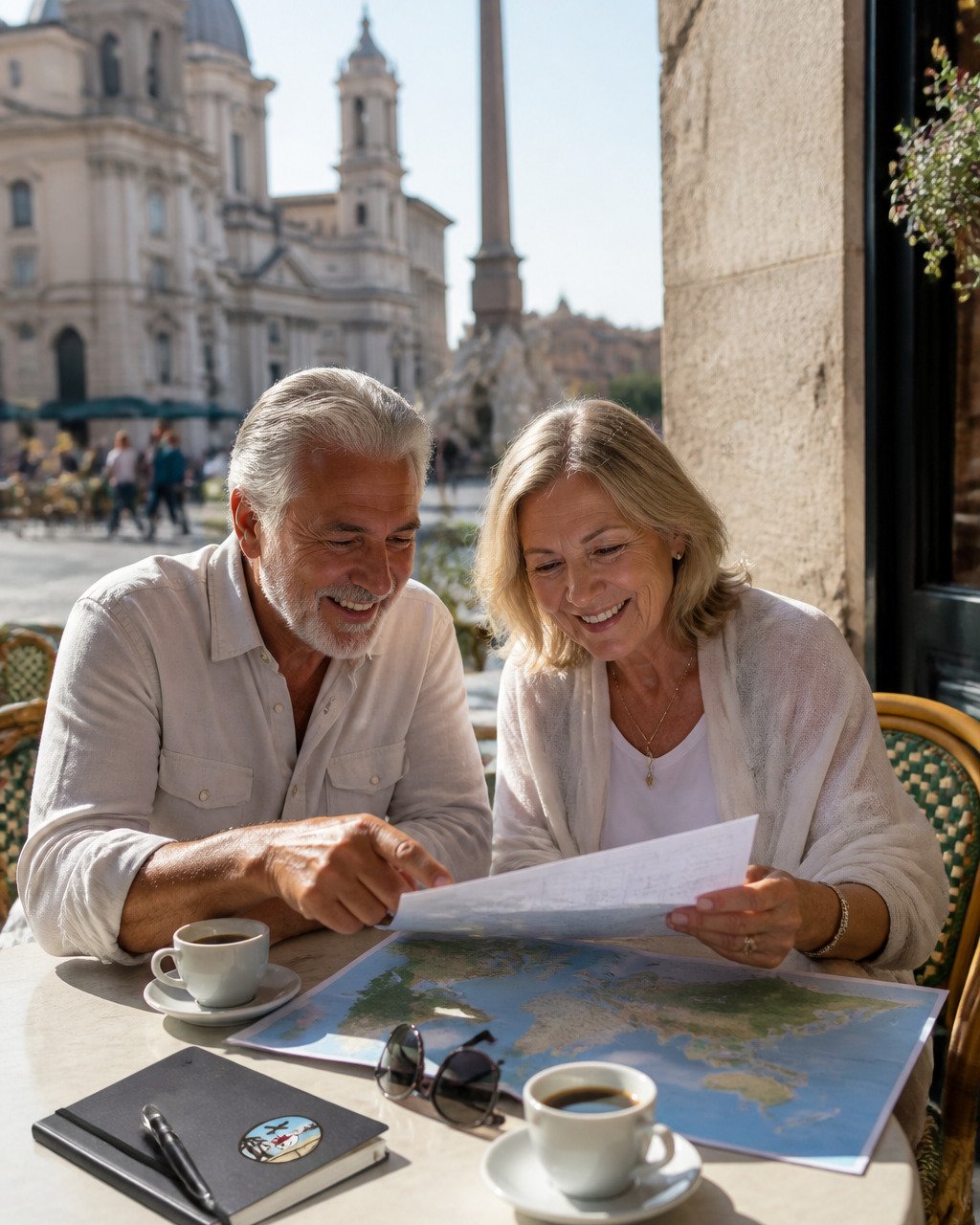
!A couple reviewing a printed itinerary at a sunlit café table in a European town square
Step 1: Decide Your Travel Style and Priorities
Your travel style is the foundation of a customized trip. Before you look at a single flight, take a few minutes to answer these questions:
- What pace feels right? Do you like packed days or long, lazy lunches?
- What matters most? History, food, art, coffee culture, nature, or faith-based sites?
- Who is traveling? Couples, friends, or multigenerational groups each need different things.
- What comfort level do you want? Boutique hotels, river cruises, or private transfers?
Write your answers down. This short list becomes your planning worksheet, and it keeps you from chasing every famous landmark you see online. If you love quiet mornings and good espresso, a route packed with five cities in six days won't feel like a vacation.
Watch out: Many travelers underestimate travel days. Trains and transfers eat up hours, so plan fewer stops than you think you can handle.
Step 2: Choose Your Destinations and Build a Route
Once you know your priorities, pick destinations that match them. Read how to design a bespoke itinerary around your preferences. Then arrange those stops in an order that avoids backtracking. A logical route saves time and money.
A simple way to build your route:
- List every place you want to see.
- Group nearby cities together.
- Start at your arrival city and finish near your departure city.
- Check train or transfer options between each stop.
Coffee lovers often add unique café stops along the way. Our Hidden Gem Coffee Experiences in Europe guide can help you find distinctive spots to fit into your route. Couples celebrating a milestone may want to read about choosing a luxury travel agency for couples before finalizing their route.
Local transit matters too. Rail Europe's guide to European train travel is a useful reference for understanding how trains connect major cities.
How Many Days to Spend in Europe for Each Stop
There's no single right answer, but a practical rule helps. Plan at least two nights in most cities so you have a full day to explore. Smaller towns and river villages often work well with one or two nights.
- Major cities: 2 to 4 nights
- Smaller towns: 1 to 2 nights
- Day trips: Plan for a half day plus travel time
For a first-time trip, most travelers find that five to seven stops is enough for a two-week vacation. Anything more can turn into a rushed schedule.
Step 3: Set a Realistic Budget and Timing
Budget and timing aren't separate decisions. They pull on each other, and the order you set them changes the whole trip. Here's the practical way to handle it.
Start with timing, then let budget shape the route. Peak summer dates in popular cities push hotel rates and tour availability in one direction. Shoulder season, roughly late April to mid-June and September to late October, usually means softer demand, easier restaurant reservations, and more comfortable walking weather.
A simple way to think about it:
- Peak season: Best for long daylight, festivals, and outdoor life. Book accommodations and key tours early; expect the least flexibility.
- Shoulder season: The sweet spot for most custom trips. Good weather, fewer crowds, more room to adjust.
- Low season: Best value and quietest streets. Verify what's actually open before you build a route around smaller towns.
The budget categories that actually move the needle
Most travelers fixate on airfare, but on a customized Europe trip the variables that swing the total most are:
- Nights, not stops. Every added city adds a hotel night, a transfer, and usually a meal on the move. Cutting one stop often saves more than downgrading three hotels.
- Accommodation tier and location. A central boutique hotel costs more than an edge-of-town property, but it can save you daily transit time and taxi rides. Decide which one you value.
- Private vs. shared experiences. Private guides and transfers cost more but compress your day and remove logistics friction, often worth it for multigenerational groups.
- Internal transport. High-speed rail between major cities is efficient; short flights add airport time on both ends. Compare door-to-door time, not just the ticket.
Before you compare options, write down your non-negotiables (the one or two things you won't compromise on) and your flexibles (hotel brand, cabin category, seat class). That single list tells any planner, or you, where to spend and where to save.
How timing changes the plan, not just the price
Season affects more than cost. Daylight hours, weather, and closures reshape what you can realistically do in a day:
- Long summer days let you stack a morning museum with an evening neighborhood walk. Winter daylight is shorter, so front-load outdoor sights and save indoor stops for late afternoon.
- Heat and crowds in midsummer argue for early starts and a midday break, especially in southern cities.
- Local holidays and events can close museums, fill hotels, or create unforgettable atmosphere, check the calendar before you lock dates.
- Shoulder-season closures affect rural hotels, ferries, and some tour operators. Confirm before building a route around them.
A quick timing-and-budget worksheet
Answer these before you book anything:
- What are my fixed dates, and how flexible are they by a week or two?
- Which season am I actually traveling in, and what does that mean for daylight and closures?
- How many nights can I afford at my preferred comfort level?
- Which one or two experiences are worth paying up for?
- What cushion am I holding back for surprises?
Pricing depends on dates, accommodations, transfers, and the experiences you choose, so we recommend asking for a current quote tailored to your plans.
Watch out: Last-minute planning often leads to higher prices and fewer choices, especially for popular train routes and boutique hotels. The fix isn't always a bigger budget, sometimes it's a smarter route.
Here's a quick look at the timing windows and budget levers covered above.
| Season | Best for | Key tradeoff |
|---|---|---|
| Peak summer | Long daylight, festivals, outdoor life | Least flexibility; book early |
| Shoulder season | Good weather, fewer crowds, easier reservations | Sweet spot for most custom trips |
| Low season | Best value, quietest streets | Confirm what's open before routing |
European Vacation Itinerary Examples to Compare
Sample routes are useful, but only if they're honest about time. The most common planning mistake isn't picking the wrong cities, it's underestimating how much of a trip disappears into transit, check-in, and recovery. Here's how to read an itinerary like a planner.
The pacing math most guides skip
A "day" in a new city isn't a full day. Count it honestly:
- Hotel checkout + transfer to station or airport: often 1.5 to 3 hours
- The journey itself: 2 to 4 hours on high-speed rail between major cities, longer with connections
- Arrival + check-in + orientation: another 1 to 2 hours
That means a move day usually yields a half day of real sightseeing at best. Two move days in a row and you've lost most of a full day to logistics. This is why a route that looks like seven cities in twelve days often feels like a blur.
A practical rule: every move day counts as half a sightseeing day. If you want a full day in a city, you need two nights there. Build your route around that number and the trip suddenly feels calmer.
Three worked examples
Classic highlights, 10 days, first-time visitors
- Two or three major cities, two to three nights each
- One internal rail leg, not three
- One guided orientation walk per city, then free time
- Best for: travelers who want the famous sights without a rushed pace
- Skip if: you want countryside or a slower rhythm
Coffee and culture, 2 weeks, coffee lovers and history fans
- Three or four cities with a café-and-neighborhood focus
- One or two day trips by rail instead of full moves
- Built-in slow mornings and one rest day mid-trip
- Best for: travelers who'd rather linger in one neighborhood than tick off landmarks
- Skip if: you want maximum countries in one trip
Slow and scenic, 2 weeks, relaxed travelers and multigenerational groups
- Two or three bases, longer stays, a river cruise segment or scenic rail
- Fewer moves, more recovery time, accessible hotels prioritized
- Best for: retirees, families with grandparents and kids, anyone who values comfort over coverage
- Skip if: you want a fast-paced highlights tour
How to adapt a template to your own trip
Templates are starting points, not prescriptions. To make one fit:
- Pick your anchor experiences first, the two or three things you'd regret missing.
- Place them on a map, then group nearby stops to avoid backtracking.
- Count move days as half days and see whether your route still fits your dates.
- Add one buffer day for weather, delays, or simply a slower morning.
- Check seasonal closures and daylight before you finalize smaller towns.
If you're traveling with a multigenerational group or anyone with mobility needs, weight the plan toward fewer moves and central, accessible hotels. The itinerary that looks less ambitious on paper usually delivers the better trip.
Watch out: A route with five countries in ten days is technically possible, but you'll spend much of it in transit. Fewer stops, longer stays, that's the customization most travelers actually want once they see the math.
Europe Trip Planning Checklist and Your Next Step
Use this checklist to keep your planning organized:
- Define your travel style and top three priorities
- Choose your arrival and departure cities
- Pick five to seven destinations that match your interests
- Allow two nights in major cities and one or two in smaller towns
- Set a budget that includes transfers and experiences
Frequently Asked Questions
How far in advance should I plan a European trip?
Planning several months ahead is a good idea. Booking early gives you more choice in flights, rail routes and accommodations, especially for peak summer weeks. Start with your dates and destinations, then book the larger pieces first, such as international flights and the hotels in the most popular cities. Smaller items like day tours and timed-entry tickets can usually wait until your itinerary is settled.
How many destinations should I include in a European vacation?
Most travelers do better with two or three main stops for a trip of one to two weeks. Each move takes time for packing, checking in and getting oriented, so every extra city cuts into the time you actually spend sightseeing. If you have a longer trip or want a broader route, you can add a fourth stop, but plan slower transitions. A customized itinerary lets you match the number of stops to your pace rather than following a fixed template.
Is it better to plan a European trip independently or use a travel advisor?
Planning on your own gives you full control and can work well for simple, single-city trips. A travel advisor is useful when you have several destinations, mixed interests or specific needs such as accessibility, a milestone celebration or a faith-based pilgrimage. At Cafe Trips and Tours, Martin Guerra works through your preferences, pace and budget and handles the logistics so you spend less time on emails and more time planning what you actually want to see. Ask any advisor to explain exactly what is included before you commit.
Planning a customized trip takes time, and it doesn't have to be stressful. If you'd like a plan built around your interests, our team at Cafe Trips and Tours would love to help. We design bilingual, personalized itineraries for couples, coffee lovers, and travelers who want a smooth, well-organized journey from start to finish. Get in touch with Cafe Trips and Tours to start planning your European vacation today.