 how-to
7 Ways to Find Authentic Local Experiences in France
Last Updated: November 4, 2026
Quick Summary
To find authentic local experiences in France, look past the famous sights and focus on people: markets, small producers, artisan workshops, and regional towns timed to local festivals and weekly markets. Choose one region, pick a base town, and book small host-led activities directly.
- Decide first what you love, such as food, history, or quiet villages, and use it as your filter.
- Pick one region and one base town, then plan one half-day outing per day.
- Check the town's tourist office and your lodging host for markets and festivals during your dates.
- Book small workshops and host-led experiences ahead, since many fill up quickly.
- Ask potential hosts who leads the group, how big it is, and what costs extra before paying.
Table of Contents
- Start With What You Actually Want to Do
- Look Beyond the Famous Sights for Unique Things to Do in France
- Use Regional Towns to See What to See in France Outside of Paris
- Plan Local Food Experiences in France Around Markets and Producers
- Find France Local Markets and Workshops Where Artisans Work
- How to Vet a Tour or Activity Before You Book
- Greetings, Etiquette, and Small Courtesies That Open Doors
- Planning Your Own Local Experience With Cafe Trips and Tours
- Frequently Asked Questions
Finding authentic local experiences in France takes a little more effort than booking the famous sights, but it is worth it. The best days often come from small, personal moments: a coffee in a neighborhood bistro, a conversation with a cheesemaker, a workshop where the artisan lets you try your hand. Below, we share seven practical ways to find those moments and make them happen.
Start With What You Actually Want to Do
Before you search for anything, decide what kind of trip you want. Our step-by-step guide to planning a customized European vacation walks through the process from start to finish.
Ask yourself a few quick questions:
- Do you love food, wine, coffee, or cooking?
- Are you drawn to history, faith, architecture, or art?
- Do you want quiet villages or lively city neighborhoods?
Write down your top three answers. This list becomes your filter for every decision that follows. It keeps you from chasing experiences that look good online but do not match how you like to travel.
Look Beyond the Famous Sights for Unique Things to Do in France
Paris, Provence, and the Riviera are wonderful, but they are also the most crowded. Many of the best unique things to do in France happen a short distance away from the main tourist routes.
Look for experiences that involve people rather than places. Browse our coffee and cafe culture experiences beyond the typical tourist spots for ideas that go deeper than the usual stops.
Good signs of an authentic experience:
- The host lives or works in the area
- The group is small
- The schedule follows local rhythms, not tour bus timing
Use Regional Towns to See What to See in France Outside of Paris
Some of the most rewarding stops are regional towns that few travelers plan around. A small town can offer a weekly market, a bakery with a long history, a Romanesque church, and a museum that locals actually visit on a rainy Sunday. The trick is choosing the right base and timing it around what's actually happening there.
Pick a base, not a blur
Hopping between cities every day is the fastest way to see a lot and experience very little. Choose one region and one base town, then plan one half-day outing per day and leave the rest open. That rhythm gives you room for the market, the unplanned conversation, the second coffee.
A few regions that reward this approach:
- Burgundy: base in Beaune or a smaller village along the Route des Grands Crus. Wine, mustard, and a Saturday market that locals actually shop.
- Loire Valley: base in Amboise, Chinon, or Saumur. Châteaux by day, riverside walks and small producers in between.
- Dordogne: base in Sarlat or a village nearby. Markets, walnut oil, foie gras producers, and prehistoric sites.
You don't need all five. Pick one, go deep, and save the rest for next time.
Time it around the local calendar
This is where most itineraries fall flat. A town can feel sleepy on a Tuesday and alive on a Saturday, and the difference is usually the market.
A few patterns worth knowing:
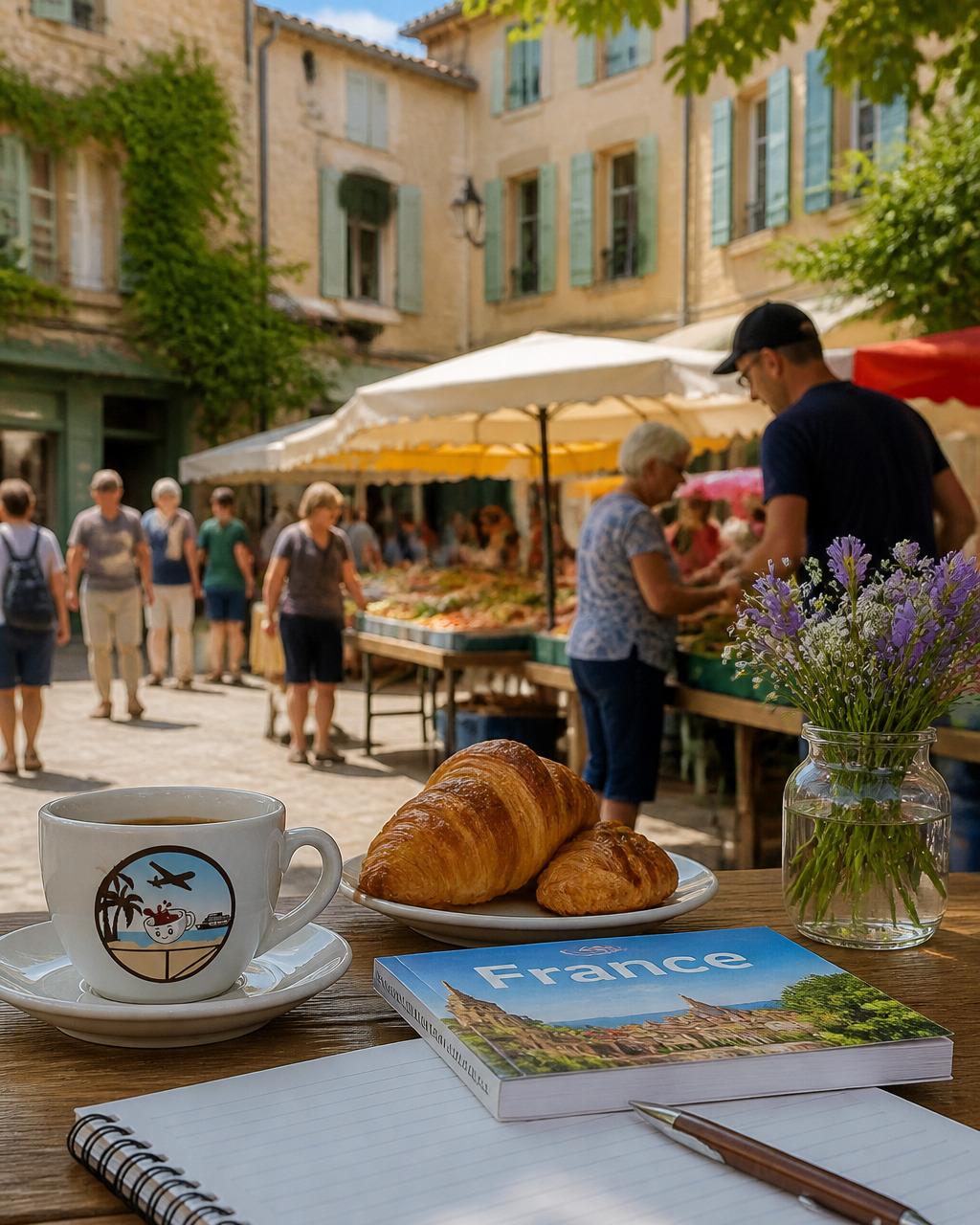
- Weekly markets are the heartbeat of most regional towns. Many run one or two mornings a week, and the town's rhythm follows them. Ask your host which day is the big one.
- Harvest season matters in wine country. Late summer and early fall bring picking, pressing, and cellar activity, but also busy roads and booked-up lodging.
- Lavender in Provence peaks in late June and early July. After that, it's cut, and the fields look very different.
A simple habit: before you lock in dates, check the town's tourist office website and ask your lodging host what's happening that week. You'll often find something worth building the trip around.
Get there realistically
Regional France rewards a car.
A few practical notes:
- Book ahead for small workshops, tastings, and any host-led experience. Many are run by one or two people and fill up.
- Check opening days. Small museums, producers, and shops often close one or two days a week, and lunch hours are real.
- Allow more time than you think. A half-day outing in a rural area often becomes a full day once you factor in the drive, the stop for coffee, and the conversation you didn't plan for.
Watch out: Assuming a small town will have an English-speaking host, an open restaurant at 3 p.m., or a taxi on demand is the most common planning mistake.
The European Commission's Transition Pathways tourism page notes that authentic local encounters, culture, and food are key reasons people travel in Europe today. European Commission tourism trends, authentic local encounters and culture
Here is a quick look at the regions covered in this section and when each one shines.
| Region | Base town(s) | Best time or highlight |
|---|---|---|
| Burgundy | Beaune or a village on the Route des Grands Crus | Wine, mustard, and a Saturday market |
| Loire Valley | Amboise, Chinon, or Saumur | Châteaux by day, riverside walks |
| Dordogne | Sarlat or a nearby village | Markets, walnut oil, and prehistoric sites |
| Alsace | Colmar or a wine village on the Route des Vins | Half-timbered streets and Christmas markets |
| Provence | Uzès, Apt, or a Luberon village | Lavender in early summer, olives in fall, truffles in winter |
Plan Local Food Experiences in France Around Markets and Producers
Food is one of the easiest ways into local life. Explore hidden gem cafe and coffee spots that reflect regional food culture if you want to taste the local scene.
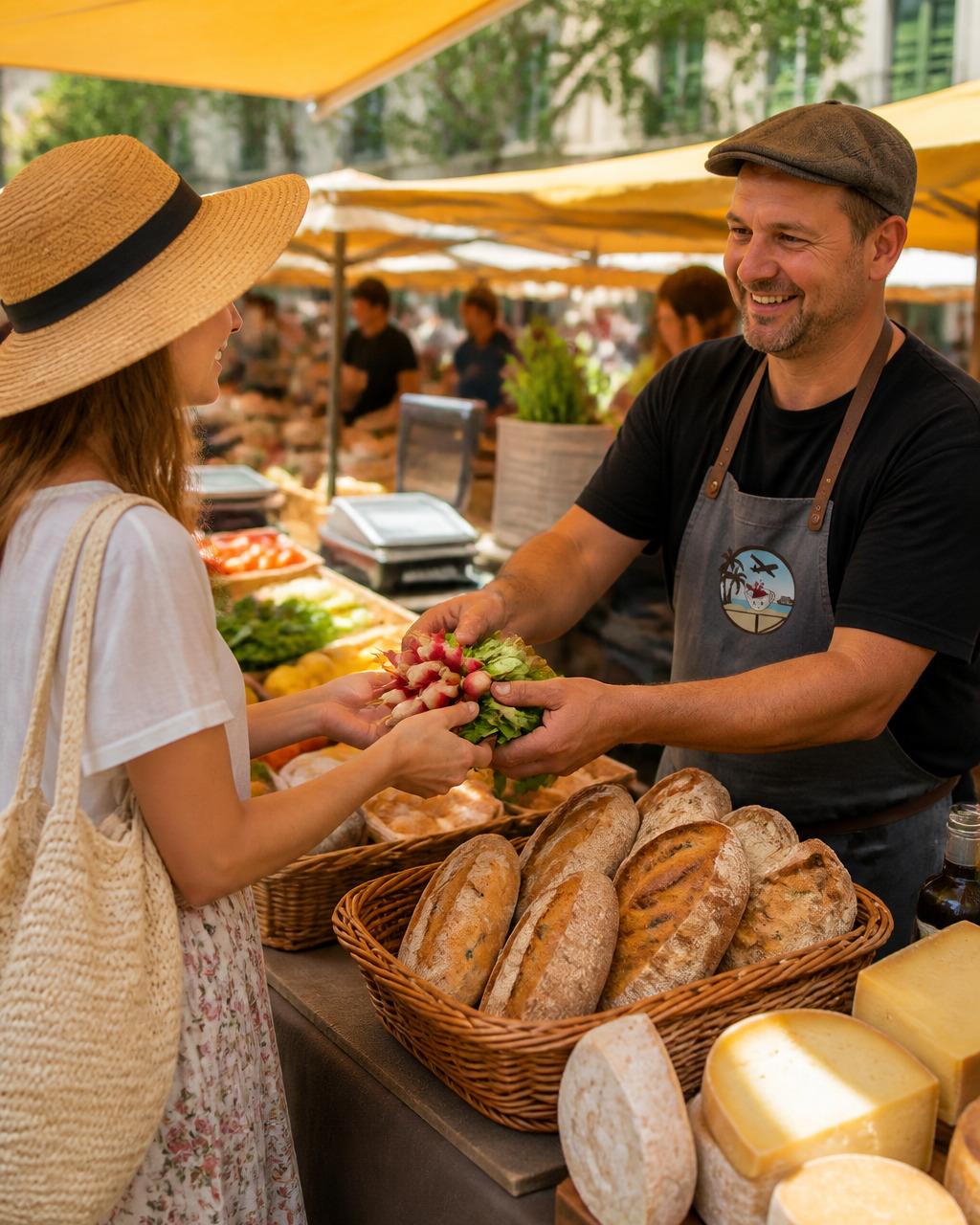
Start by visiting a weekly market early in your stay. Vendors often recommend what to buy and how to use it.
Local food experiences in France work best when they follow the seasons. Ask about what is fresh that week, and plan your meals around it.
Find France Local Markets and Workshops Where Artisans Work
Workshops are another strong source of authentic experiences. Potters, glassblowers, perfume makers, and lavender distillers often welcome visitors who want to see how their craft is done.
Many workshops offer short hands-on classes. Others allow a quiet visit where you can watch and ask questions. Both can be memorable.
Keep these tips in mind:
- Book ahead, since many workshops are small and run by one or two people
- Ask whether the artisan speaks English, or bring a translation app
- Buy directly from the maker when you can, so the money stays with them
How to Vet a Tour or Activity Before You Book
Not every experience labeled "local" is authentic. Some are excellent. Others are a host reading a script to a group of thirty. Before you pay, take a few minutes to check what you're really getting. This is the part most travel articles skip, and it's the part that decides whether your day feels real or staged.
The five-minute check
Start with the listing itself. A genuinely local operator usually tells you who runs the experience by name, where they live, and how long they've done it. If the page is all adjectives and no people, that's your first clue.
Then ask these questions directly, by email or message:
- Who leads the experience, and do they live in the area year-round?
- How many people will be in the group at peak season?
- What exactly is included, and what costs extra on the day?
A good host answers these in plain language and quickly. Vague, slow, or copy-paste replies tell you something too.
Red flags worth taking seriously
- The description could apply to any country. If you could swap the town name and nothing changes, it's a product, not a place.
- The group size is hidden or described as "small" with no number.
- Photos show only staged poses, no real workspace, kitchen, or street.
Watch out: Reviews that praise "the experience" without naming a person, a dish, a street, or a moment are the easiest ones to fake. Read for specifics, not stars.
Free versus paid: an honest trade-off
A lot of the best local moments cost nothing. A weekly market, a village bakery, a parish church, a walk along a working harbor.
Paid experiences buy you access and context: a cheesemaker who opens the aging room, a potter who lets you throw a bowl, a guide who introduces you to the vendor she's bought from for twenty years.
A practical middle path: pay for one or two small, host-led experiences per region and self-guide the rest. You get depth without turning your trip into a schedule.
Book direct when you can
Many small producers and guides take bookings by email, phone, or their own website. Booking direct usually means the money stays with the person doing the work, and you often get a faster, more personal reply. Ask about cancellation terms in writing before you pay anything, and confirm the meeting point the day before.
The ethics check
Authenticity and respect go together. Before you book, ask yourself a few honest questions:
- Does this experience support an independent producer, or does it funnel visitors through a middleman?
- Does it take place in a working neighborhood or a home, and if so, are visitors asked to behave accordingly?
- Is the host paid fairly and treated as a partner rather than a prop?
If the answer to any of those makes you wince, skip it. There are plenty of better options, and the good hosts notice who shows up with respect.
If you're comparing private tours, our guide on how to book private luxury tours walks through what to ask a provider. For couples planning a trip, our Best Luxury Travel Agency for Couples: 2026 Guide covers what to look for before you commit.
Greetings, Etiquette, and Small Courtesies That Open Doors
A few simple courtesies can change how locals respond to you. The French often expect a greeting before any request, so start every interaction with a warm "Bonjour" or "Bonsoir."
Useful phrases to learn:
- Bonjour, madame / monsieur: a polite greeting
- S'il vous plaît: please
- Merci beaucoup: thank you very much
Small habits matter too. Speak quietly in cafés, keep your voice low in shops, and wait to be seated in restaurants. Locals notice these details, and they tend to be more generous with their time when they do.
Planning Your Own Local Experience With Cafe Trips and Tours
If planning all of this sounds like a lot of work, you do not have to do it alone.
Martin Guerra works closely with clients to understand what they love, then shapes each day around those passions.
Ready to start? Tell us what you enjoy most, and we will help you build a trip full of authentic moments. Contact us to begin planning your French experience.
Frequently Asked Questions
How can I find authentic local experiences in France?
Start by choosing one or two interests, such as cooking, wine, crafts, or regional history, and then look for experiences hosted by people who live and work in that area. Small workshops, family-run producers, and neighborhood guides usually offer more genuine contact than large group tours. Ask a potential host how many guests they take, whether they lead the experience themselves, and what a typical visit includes. Clear, specific answers are a good sign that the experience is real and well run.
How can I tell whether a tour or activity offers a genuine local experience?
Look for hosts who name the people leading the activity, describe the place they work, and explain their methods rather than only listing attractions. Be cautious of itineraries that promise exclusivity but also include several rushed stops in a single morning. Reviews from recent visitors who mention specific conversations or small details tend to be more useful than general praise. If you can, ask the operator how they support local producers and how many guests they bring to each site.
What should I know about French etiquette before visiting local shops and restaurants?
A simple greeting goes a long way. When entering a shop, bakery, or cafe, say Bonjour or Bonsoir before asking for anything, and say Au revoir when you leave. Locals generally expect this courtesy, and skipping it can make an interaction feel abrupt. Learning a few basic phrases, such as s'il vous plait and merci, also helps you connect with residents and makes everyday exchanges more pleasant.
How can I explore France outside of Paris without rushing?
Choose one or two regions rather than trying to cover the whole country. Smaller towns and villages give you time to visit local markets, attend a workshop, and eat at family-run restaurants. Plan for slower transport between destinations, and build in unscheduled time for wandering. A tailor-made itinerary can help sequence these stops so that travel days do not crowd out the experiences you care about most.