 ultimate-guide
How to Plan Luxury Coffee Tours: A Complete Guide
Table of Contents
- Define Your Luxury Coffee Tour Vision
- Selecting the Right Coffee Regions and Estates
- Designing Bespoke Coffee Travel Itineraries
- Booking Private Coffee Plantation Tours
- Curating Luxury Specialty Coffee Experiences
- Logistics, Timing, and Pre-Tour Preparation
- Frequently Asked Questions
Last Updated: September 30, 2026
Define Your Luxury Coffee Tour Vision
Planning luxury coffee tours begins with clarity about what "luxury" means to you. The most rewarding coffee journeys blend exclusivity with authenticity, combining private estate access with genuine cultural immersion rather than polished resort presentations.
Identify your primary motivation: flavor complexity and cupping, cultural immersion, meeting farmers, or a hands-off VIP experience. Your answer shapes which regions and estates will deliver what you're seeking.
Consider whether you prefer small-group experiences with other enthusiasts or completely private itineraries, and whether you prioritize comfort or direct access to high-altitude micro-lots. Document these preferences before researching regions.
Selecting the Right Coffee Regions and Estates
The world's finest specialty coffee grows in the coffee belt around the equator. Your choice of region should balance coffee quality, logistical accessibility, and availability of private estate experiences.
Colombia offers excellent farm-to-cup experiences with established luxury hospitality. Ethiopia's highlands produce distinctive natural-processed coffees but require more planning. Costa Rica combines accessibility with sustainable practices. Guatemala and Honduras feature high-altitude estates producing complex micro-lots.
When evaluating estates, ask whether owners or head agronomists personally guide tours and whether you can observe fermentation and drying bed management. The best private coffee plantation tours grant access to nurseries, beneficio facilities, and cupping labs.
Designing Bespoke Coffee Travel Itineraries
Bespoke coffee travel itineraries weave together coffee education, cultural immersion, and logistical precision, differentiating luxury specialty coffee experiences from standard group tours.
Work with a travel partner who understands coffee. They should sequence visits from lower elevations (processing and fermentation) to high-altitude estates (terroir differences), including private cupping sessions where you learn to identify acidity, body, and aroma profiles.
Time visits to align with harvest season when possible for context that off-season visits cannot replicate. Luxury itineraries include private harvest day experiences rather than public groups.
Include cultural experiences: visit villages where farming families live, learn regional history, and experience local cuisine. This integration separates luxury coffee tours from transactional experiences.
Booking Private Coffee Plantation Tours
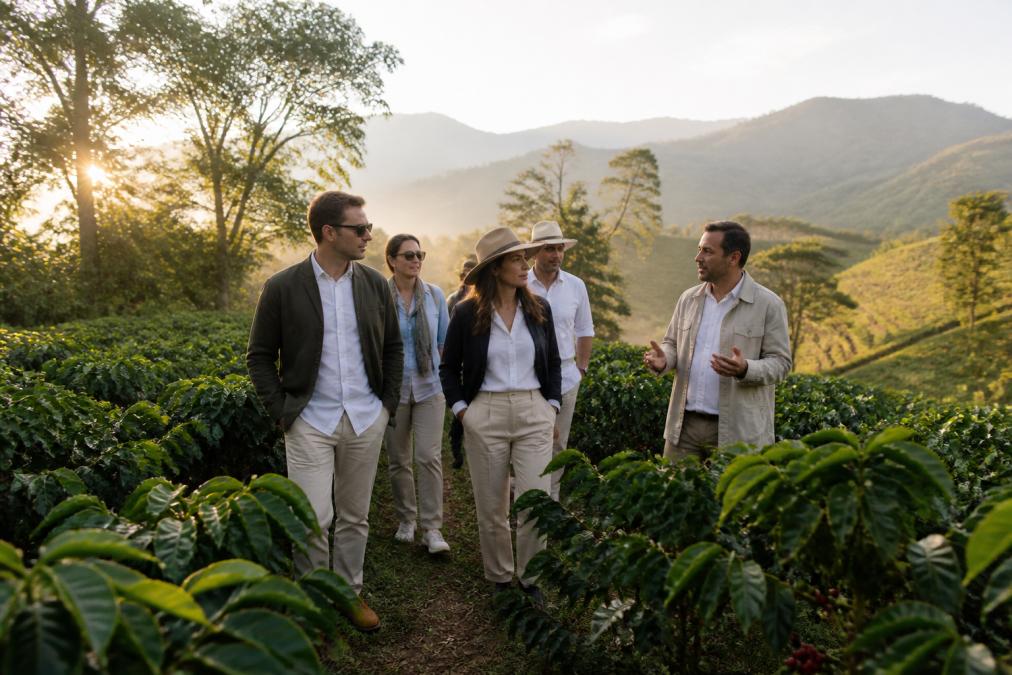
Private coffee plantation tours require advance coordination through travel specialists with established estate relationships. Most premium estates do not advertise online or accept walk-in visitors.
Understanding Luxury Tour Price Tiers and What They Include
Coffee tour pricing varies by group size, estate exclusivity, and experience depth. Understanding these tiers helps you allocate budget appropriately.
Group Tours (Budget Tier): $150-$400 per person per day
Group tours operate on fixed schedules with 8-15 participants, including guided walks, basic processing explanation, and group cupping. Transportation is shared and meals are at standard restaurants. They offer limited personalization and no private estate access.
Small-Group Private Tours (Mid-Luxury Tier): $400-$900 per person per day
Small-group private tours accommodate 4-8 people with private estate access, dedicated guides, personalized cupping, and local ingredient meals via private vehicle. This tier offers meaningful personalization without ultra-luxury costs.
Completely Private Estate Experiences (Ultra-Luxury Tier): $1,200-$3,500+ per person per day
Completely private tours customize experiences for 2-4 people with estate lodges, estate chef meals, owner meetings, and access to nurseries and fermentation labs. You control pace and estate selection. Some include private roasting demonstrations and direct micro-lot purchasing.
Estate Residency Programs (Bespoke Tier): $3,500-$8,000+ per person for 3-7 days
Some premium estates offer multi-day residency programs with on-property stays, daily farm participation, and intensive education. These rare programs require 3-6 months advance booking and appeal to serious professionals and enthusiasts.
Specifying Your Requirements When Booking
When booking, specify group size, travel dates, coffee interests, and whether you want cupping education, agricultural focus, or cultural immersion. Discuss transportation logistics, as some estates require 4x4 vehicles.
Be explicit about your budget tier and expectations. Clarify whether pricing includes meals, transportation, and cupping materials for small-group tours, or overnight stays and private chef meals for ultra-luxury access.
Book 6-12 weeks in advance for popular estates during peak seasons.
What's Included vs. What Requires Separate Arrangement
Confirm what's included in your quoted price. Premium tours typically include estate walks, cupping sessions, and local ingredient meals. The following usually require separate arrangements:
- International flights: Budget $600-$1,500 depending on origin and destination
- In-country transportation to/from the airport: $50-$200 depending on distance
- Accommodations in nearby towns (if not staying on estate): $150-$400 per night for mid-luxury hotels; $400-$800+ for ultra-luxury boutique properties
- Meals in towns (if not included in tour package): $20-$60 per meal
- Travel insurance (essential for high-altitude activities): $150-$400 for a 1-2 week trip
- Visa fees (if required): $0-$200 depending on destination country
- Coffee shipping (if purchasing directly from estates): $30-$150 per 5-pound box depending on destination and carrier
Evaluating Tour Operator Credibility
Not all tour operators have genuine estate relationships. Legitimate luxury coffee tour specialists can provide:
- Direct references from estate owners or managers (not just client testimonials)
- Detailed itineraries showing specific estates, arrival times, and activities (not vague descriptions)
- Clear pricing breakdowns showing what's included and what isn't
- Flexibility to customize itineraries based on your interests
- Knowledge of coffee processing, varietals, and terroir (not just logistics)
Curating Luxury Specialty Coffee Experiences
Luxury specialty coffee experiences include cupping sessions led by certified Q-graders explaining how processing affects flavor, private meetings with estate owners, and opportunities to purchase rare micro-lots directly.
Learning to Identify Coffee Varietals in the Field
Premium coffee tours should include hands-on varietal identification training. Ask your tour operator to brief you on primary varietals grown on estates you'll visit.
Common specialty varietals include:
- Bourbon: Characterized by broader, more rounded leaves with a slightly reddish tint on new growth. Bourbon plants are typically shorter and bushier than other varietals. The cherry tends to ripen more uniformly, which is why Bourbon is favored for natural processing. On the tree, look for dense branching and compact plant structure.
- Typica: Features longer, more pointed leaves and a more upright growth pattern. Typica plants are taller and more susceptible to wind damage, which is why they're often planted in sheltered microclimates. The cherry ripens less uniformly than Bourbon, making selective hand-picking essential.
- Geisha (Gesha): Identifiable by exceptionally long, narrow leaves and an open, airy canopy structure. Geisha plants are notably tall and produce smaller yields per plant, which contributes to their premium pricing. The plant's distinctive appearance makes it easy to spot once you know what to look for. Geisha thrives at higher elevations (often above 1,800 meters) and produces coffees with floral and tea-like characteristics.
- Caturra: A compact Bourbon mutation with smaller leaves and a denser plant structure. Caturra matures faster than Bourbon and produces higher yields, making it economically important for many estates.
- Catuai: A cross between Caturra and Mundo Novo, featuring intermediate leaf size and plant height. Catuai is known for disease resistance and consistent productivity.
Processing Method Demonstrations and Flavor Impact
Some estates offer processing demonstrations showing how fermentation duration and drying bed management create natural-processed coffees with berry and floral notes versus washed coffees with brighter acidity. Request access to fermentation tanks.
Direct Micro-Lot Purchasing and Rare Varietal Access
Luxury tours should include opportunities to purchase rare micro-lots directly from estates at prices lower than retail roasters charge. Micro-lots are small, distinct plantation sections harvested separately to preserve terroir.
Logistics, Timing, and Pre-Tour Preparation
Successful luxury coffee tours demand logistical attention. Many estates sit at 1,500-2,000 meters elevation. Arrive a day or two early for acclimatization to prevent altitude-related discomfort during cupping.
Frequently Asked Questions
What should a high-end coffee travel itinerary include?
A luxury coffee tour combines private estate access, expert-led cupping sessions with specialty coffee professionals, farm-to-cup processing demonstrations, and cultural immersion. The best itineraries feature exclusive visits to micro-lot producers, hands-on harvesting or roasting experiences, and meals featuring local cuisine paired with single-origin coffees. Your itinerary should also include time for rest, regional exploration, and curated tastings that highlight terroir and varietal differences. Timing matters too, peak harvest season (typically September through March, depending on region) offers the most authentic experiences.
How far in advance should I book a bespoke coffee tour?
Book 3 to 6 months ahead for private coffee plantation tours and luxury specialty coffee experiences. This timeline allows your travel specialist to secure exclusive estate access, arrange private transportation, coordinate with specialty coffee cupping experts, and customize every detail of your itinerary. Last-minute bookings often result in generic group tours rather than the personalized, VIP experiences that define true luxury coffee travel. Early planning also provides flexibility to adjust dates based on harvest seasons and ensures availability at preferred estates.
What are the best regions for luxury coffee tourism?
Top destinations include Colombia's coffee triangle (known for high-altitude arabica and rich terroir), Ethiopia's birthplace regions (offering estate-grown specialty varieties), Costa Rica's volcanic highlands (producing balanced, clean-cup coffees), and Kenya's high-altitude farms (celebrated for complex acidity and fruity tasting notes). Each region offers distinct agronomy, processing methods, and cultural experiences. Your choice depends on your preferences for flavor profiles, cultural immersion, and travel style. A professional travel specialist can match your coffee interests with the right region and connect you with private estates that align with your luxury standards.
What defines a luxury coffee tour experience?
Luxury coffee tours prioritize exclusivity, expertise, and personalization over mass-market group experiences. They feature private access to single-estate or micro-lot producers, guided cupping sessions led by certified specialty coffee professionals, small group sizes (often 2-6 travelers), and bespoke itineraries tailored to your interests. Premium experiences include VIP treatment at beneficios (processing facilities), hands-on involvement in roasting or fermentation, accommodations at high-end estates or partner properties, and seamless logistics with dedicated support. The difference from standard tours lies in depth of knowledge, personalized pacing, exclusive access, and attention to every detail, from transportation to meal planning to post-tour coffee shipments.