 ultimate-guide
Planning a Faith-Based Pilgrimage Tour: A Complete Guide
Last Updated: October 30, 2026
Quick Summary
A faith based pilgrimage starts with a clear spiritual purpose, which then guides your destination, itinerary, and budget. Plan 12 to 15 months ahead, because popular sites and group accommodations fill early. Build worship and rest into the daily schedule rather than treating them as add-ons.
- Write down your spiritual purpose before choosing any destination or sites.
- Start planning 12 to 15 months before departure, since popular sites and group lodging fill early.
- Build a fixed prayer time into each day and schedule rest every few days.
- Compare budget quotes line by line on airfare, lodging, meals, transport, site fees, and soft costs.
- Collect medical, insurance, and emergency contact details from every participant before departure.
Table of Contents
- Start With the Spiritual Purpose of Your Journey
- How to Plan a Christian Pilgrimage: Choosing Your Destination and Holy Sites
- Building a Christian Pilgrimage Itinerary Around Worship and Rest
- End-to-End Planning Timeline: From 12-15 Months Out to Departure
- Understanding Pilgrimage Tour Cost and Where Your Budget Goes
- Accessibility, Health, and Group Leadership Considerations
- Pilgrimage Tour Packing List and Final Preparations
- Booking Your Pilgrimage With Cafe Trips and Tours
- Frequently Asked Questions
Planning a faith based pilgrimage tour is one of the most meaningful trips a traveler can take, and it is also one of the easiest to undertake without a clear plan. Cafe Trips and Tours designs faith-based journeys that let the spiritual weight of the trip come through clearly, with the logistics handled for you. Global religious tourism was valued at USD 325.0 billion in 2025 and is projected to reach USD 370.8 billion in 2026, according to Grand View Research religious tourism market report.
This guide walks through the planning process in the order that matters, starting with the purpose of the trip and ending with the practical details of booking. Each section can be read on its own, but they build on one another, so the decisions you make early shape what follows.
Start With the Spiritual Purpose of Your Journey
Every good faith based pilgrimage starts with a clear answer to one question: what do you hope to receive from the trip? Some travelers seek healing, others want renewal after a difficult season, and many come to deepen a relationship with Christ or to share the experience with family or their church community.
Your purpose should also shape the pace of the trip. A group seeking quiet reflection needs longer stretches of unstructured time than a group focused on historical study. Decide early whether the pilgrimage centers on prayer, teaching, fellowship, or a combination, because that choice affects everything from hotel selection to how many sites you visit in a day.
How to Plan a Christian Pilgrimage: Choosing Your Destination and Holy Sites
Choosing a destination is largely a question of which sites carry the meaning you want to experience. Begin with the sites that anchor your purpose, then add the surrounding places that give the journey its shape.
Check the practical realities of each site before committing. Some holy places have restricted visiting hours, timed-entry requirements, or dress codes, and some require advance booking for group access. Confirm these details with the site itself or with your tour planner rather than relying on general guides, since rules change.
Travel distance matters too. Combining sites within a reasonable radius keeps daily travel manageable and leaves room for the reflection that makes a pilgrimage distinct from a sightseeing tour.
Building a Christian Pilgrimage Itinerary Around Worship and Rest
A pilgrimage itinerary has to make room for worship as a fixed commitment, not an optional add-on. Plan a set prayer time at the start of the day, and build the remaining schedule around it.
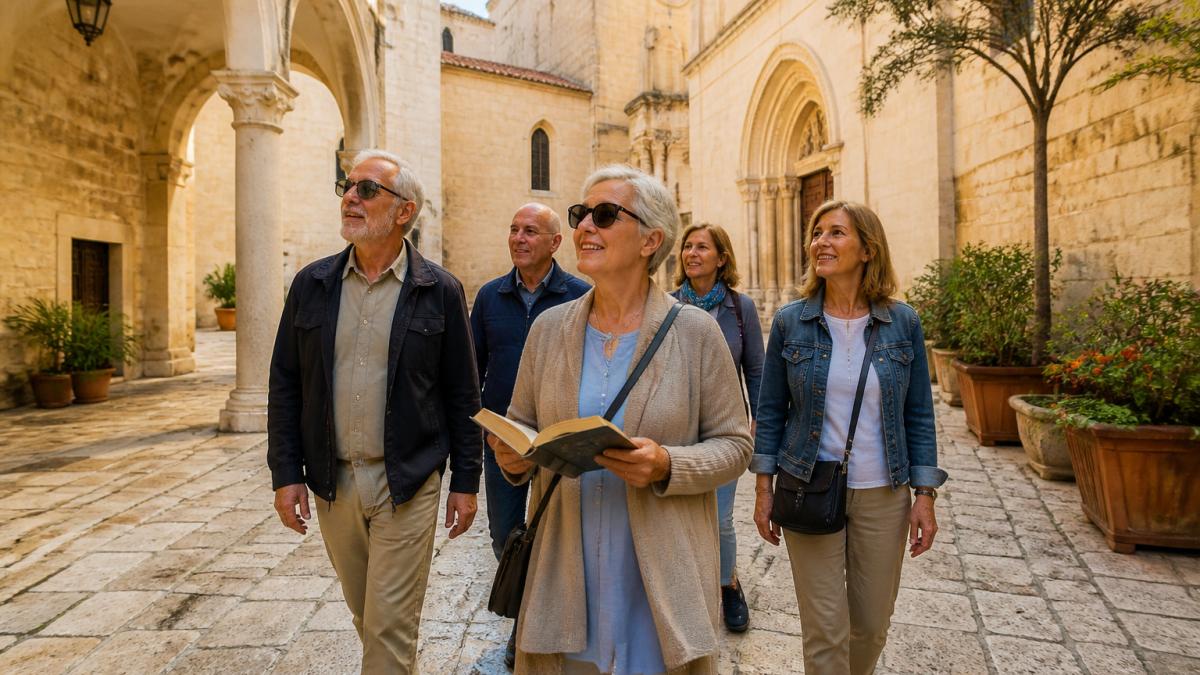
Rest deserves the same deliberate planning. Pilgrims often underestimate how physically and emotionally demanding a full day of visits can be. Build in an afternoon of free time every few days, and avoid stacking three long travel days in a row. A realistic pace protects both the group's energy and the quality of its prayer.
Flexibility is essential. Weather, closures, and group needs will force changes, so keep one or two buffer blocks in each week that can absorb a delay without collapsing the whole schedule.
End-to-End Planning Timeline: From 12-15 Months Out to Departure
Most pilgrimage groups benefit from starting 12 to 15 months before departure, because popular sites and group accommodations fill early. This window gives you time to confirm dates, secure group rates, and arrange any special access that holy sites require.
A practical sequence looks like this:
- 12-15 months out: Define the spiritual purpose, choose the destination, and set tentative dates.
- 9-12 months out: Confirm the core sites, book group accommodation, and open registration.
- 6-9 months out: Finalize the itinerary, arrange guides and worship leaders, and collect participant information.
- 3-6 months out: Confirm flights, transfers, and any travel documentation, and send the detailed itinerary to participants.
- 1-3 months out: Hold a preparation session, confirm final numbers with suppliers, and address health or accessibility needs.
- Final weeks: Share the packing list, emergency contacts, and a plan for group communication while abroad.
Working backward from the departure date keeps each task on schedule and makes it easier to spot where delays would create problems.
The article lays out the planning sequence by months before departure:
| When | Task |
|---|---|
| 12-15 months out | Define purpose, choose destination, set tentative dates |
| 9-12 months out | Confirm core sites, book group accommodation, open registration |
| 6-9 months out | Finalize itinerary, arrange guides and worship leaders |
| 3-6 months out | Confirm flights and transfers, send detailed itinerary |
| 1-3 months out | Hold preparation session, confirm numbers, address health needs |
| Final weeks | Share packing list, emergency contacts, communication plan |
Understanding Pilgrimage Tour Cost and Where Your Budget Goes
Airfare. International airfare is usually the largest single line and the most volatile.
Lodging. Pilgrimage lodging ranges from simple guesthouses near a shrine to full-service hotels in city centers.
Meals. Most group tours include breakfast and a set number of dinners, with lunches and free-time meals on your own.
Ground transportation and guides. This covers motorcoach transfers, local guides, and any site-specific guide fees.
Site fees and worship arrangements. Entrance fees, timed-entry reservations, and any stipends for a priest, cantor, or worship leader belong here.
Ask every supplier about the payment schedule: the deposit amount, the date the balance is due, and the cancellation terms at each stage. Those terms affect your group's cash flow as much as the total price does, and they determine how much risk the group carries if numbers drop. A deposit that is refundable until 90 days out behaves very differently from one that is non-refundable at signing.
Pricing depends on quantity, dates, and delivery. For current prices or a quote for your group, contact Cafe Trips and Tours directly.
Accessibility, Health, and Group Leadership Considerations
Accessibility planning should happen early, because many historic holy sites involve stairs, uneven stone, long walking distances, or limited seating, and those constraints cannot be fixed at the last minute.
Health planning is more than a first-aid kit.
Group leadership needs a written plan, not an informal understanding.
Safeguarding deserves its own line. Agree in advance on how the group will stay together at crowded sites, what the check-in procedure is at each stop, and what happens if someone becomes separated.
Contingency planning is where most groups are weakest. Write down the procedures before departure: who calls emergency services, who contacts the tour operator, who informs the group, and who speaks with families.
Finally, build in a cancellation and disruption plan. Know what your tour operator's policy covers if a site closes, a flight is delayed, or a participant must leave early, and make sure participants understand their own travel insurance coverage before they go.
Pilgrimage Tour Packing List and Final Preparations
A pilgrimage packing list should reflect the spiritual and physical demands of the trip. Essentials typically include:
- Passport with sufficient validity, plus copies stored separately
- Comfortable walking shoes suited to uneven stone surfaces
- Modest clothing for visiting churches and holy sites, including a covering for shoulders and knees
- A small Bible or prayer book, plus any devotional materials you use daily
- Medications in their original packaging, with a copy of prescriptions
- A basic first-aid kit and any personal health supplies
- Travel adapters, a portable charger, and a printed copy of the itinerary
Final preparations should include a pre-departure meeting where the group reviews the schedule, emergency procedures, and expectations for conduct at holy sites. Confirm that everyone has travel insurance that covers medical care abroad.
Booking Your Pilgrimage With Cafe Trips and Tours
Cafe Trips and Tours designs faith-based journeys around the purpose, pace, and needs of each group. Martin Guerra, the founder, is a seasoned travel expert who leads the planning process.
Because every pilgrimage is different, pricing depends on your dates, group size, destination, and service level. For current rates and availability, contact Cafe Trips and Tours directly to request a quote tailored to your group.
Frequently Asked Questions
How do you plan a faith-based pilgrimage tour?
Start by defining the spiritual purpose of the trip, then choose a destination and holy sites that match it. Next, set travel dates roughly 12 to 15 months ahead, especially for group travel, and build an itinerary that balances sacred visits, daily Mass or prayer, and rest. Confirm lodging, transport, and a group leader early, and review accessibility needs for every participant. A detailed planning timeline keeps the process manageable from first idea to departure.
What should you consider when choosing a pilgrimage tour?
Look at the tour's focus on your denomination or interests, the pace of the itinerary, and whether daily worship is built in. Check how the operator handles accessibility, emergencies, and group leadership, since these matter most when something changes abroad. Ask what is included in the price and what is extra, and request a written itinerary. Compare how much planning support you receive versus how much you must arrange yourself.
How long should a pilgrimage tour last?
Most pilgrimage tours run anywhere from about one week to two weeks, depending on how many sites are visited and how much time is spent in each. Shorter trips suit travelers with limited mobility or time, while longer trips allow for more reflection and rest days. A realistic pace matters more than the number of stops, so build in buffer time for transfers, weather, and rest. Discuss the length with your group leader before committing to dates.
How do you create a meaningful pilgrimage itinerary?
Begin with the spiritual goals of the group, then select sites that connect to those goals rather than adding every famous location. Schedule daily prayer, Mass, or reflection at times that suit your participants' energy levels. Balance structured visits with unhurried time for personal reflection, and include a few flexible hours for rest. Share the draft itinerary with participants early so they can raise concerns and adjust expectations.
What should travelers pack for a religious pilgrimage?
Pack comfortable walking shoes, modest clothing that meets the dress requirements of the sites you will visit, and a lightweight layer for cool churches. Include a small Bible or prayer book, rosary or other devotional items, and a notebook for reflections. Bring prescription medications in original containers, a basic first-aid kit, and copies of important documents. A complete packing list reduces last-minute stress and helps the group travel light.
How much does a faith-based pilgrimage tour cost?
Pricing depends on quantity, dates, and delivery, so costs vary widely based on the destination, length of stay, lodging standards, and how many services are included. Expenses typically include airfare, lodging, meals, transport between sites, guided visits, and group leadership. Ask for an itemized quote that separates required costs from optional extras. For current prices or a personalized quote, contact Cafe Trips and Tours directly.
Should you plan a pilgrimage independently or join a group tour?
Independent planning gives you full control over pace and spending, but it demands time for research, bookings, and problem-solving abroad. A group tour handles many logistics and offers shared worship and fellowship, though it limits flexibility. Many travelers find a middle path works best, such as a custom itinerary planned with a travel agency that handles the details. Weigh your time, comfort with travel, and spiritual goals before deciding.
Can a pilgrimage tour be combined with coffee experiences?
Yes. Cafe Trips and Tours designs custom itineraries that blend faith-based visits to historic pilgrimage sites with coffee experiences and cultural immersion. Because each itinerary is built around your group's interests, you can schedule reflective time at holy sites alongside guided coffee stops. Share your priorities early so the planning team can shape the balance you want.